How Did I Write a Novel In Less Than a Year? By Writing Badly.
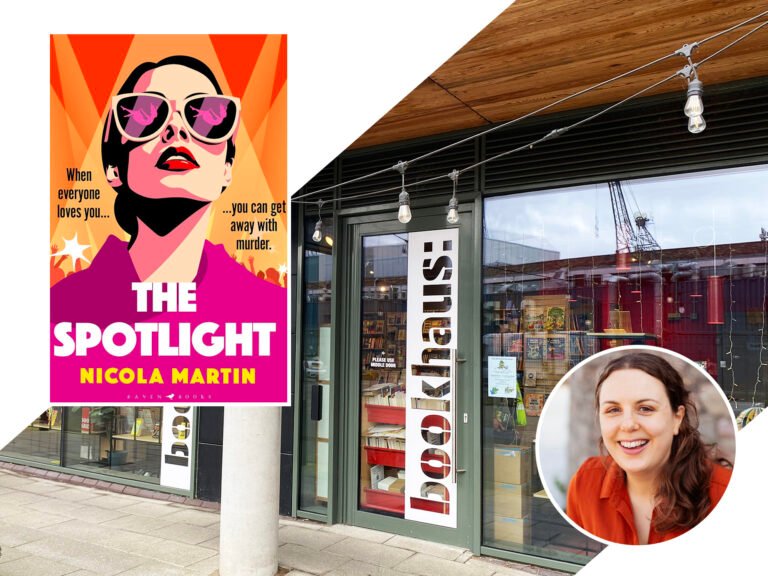
The Spotlight, my new mystery-thriller about fame, fortune and murder, is now on bookshelves worldwide, but not too long ago, it was a vague, one-line idea:
What if you were living your dream as a popstar on tour, but there was a killer out to get you?
This book was my first time writing “under contract” for a publisher, which meant I had big, scary, immovable deadlines. No time to dilly-dally. I had less than a year to write a book.
Bear in mind that my first novel, Dead Ringer, took five years from idea to finished product, and my second novel, The Getaway, only had a slightly shorter gestation period at four years.
Changing my writing process
Relying on the lessons I learned from writing those two books, I changed my writing process fundamentally.
How?
I decided to write badly.
By which, I mean, I gave myself permission to write a really shitty, nonsensical, b-a-d draft. A draft zero, if you will. And I decided to do it as quickly as possible.
The “shitty first draft” is a common technique in creative writing, but it had never appealed to me. Part of the joy of writing, I always thought, lies in crafting lovely sentences. It’s satisfying to labour over a scene, spending hours writing, agonising, rewriting, agonising again, until you can sit back and say, “Ahhh, job well done.”
I still believe that’s a satisfying process – but I think it has absolutely no place in first-draft writing.
Good sentences, bad novel
Let me tell you the story behind the story of my second novel, The Getaway. I was obsessed with this idea from the start, with its setting of a private island in the Caribbean. I laboured over my first draft, pouring every bit of dark-luxury atmosphere into it that I could. Then I re-read it and realised…
It was terrible.
Not on a sentence level. The sentences were fine. The atmosphere was atmosphere-ing. But the story was awful. Vague, where it was supposed to be mysterious. Convoluted, where it was supposed to be suspenseful.
The photo negative moment
With The Getaway’s first draft, I had not written the novel I’d wanted to write. The only good thing about it was that I could hold it up to the light like a photo negative and see what wasn’t there.
And you know what? A photo negative is better than nothing. A photo negative is a starting point. I’d written a draft that had shown me what I didn’t want the novel to be, so now I could flip the whole thing on its head and write everything I hadn’t written the first time.
In the real time, what ensued was an awful lot of writing and subsequent drafts and listening to smart people giving me good advice. But, for the sake of this blog post, we’ll just montage through all that work and get to the end: I fixed my novel, made it mysterious (not vague) and suspenseful (not convoluted), got a big-time book deal, and now you can buy or borrow a copy of The Getaway from wherever you get books.
Successssssssssssssssssssssssssss!
Writing badly on purpose
Back to The Spotlight, which, you’ll remember, I needed to write in less than a year, under deadline.
I didn’t have time to labour over multiple drafts that weren’t working. I needed to accelerate the process.
Hence, I went from trying to write well to trying to write badly.
Instead of spending months on what I thought to be a good first draft (only to be disappointed), I would instead speedrun through a bad first draft. I’d get to that photo negative moment, and get there fast.
Draft zero writing
For my draft zero, I stripped out everything pretty and ornamental about my fiction. No description. No metaphors or similes. No atmosphere. All I focused on was plot and character.
My draft zero was like a screenplay, but a really bad screenplay, because my dialogue was wooden and rushed. I broke every rule of good writing, by telling rather than showing (“she was anxious”, “she was sad”). I wrote notes to myself in lieu of doing research. (What does this house they’re staying in look like? No idea!)
It took me about six weeks to finish my draft zero and it was exhausting.
What did I have to show for it? A rushed, messy draft that was basically incomprehensible to anyone but me.
But it was a start. Now I could see what was working about my novel and what wasn’t. Which characters needed fleshing out more. Which sequences needed to be cut or fundamentally altered.
Can’t edit a blank page
The cliché “you can’t edit a blank page” is prevalent for a reason. My messy draft zero was so, so, so, so much better than a blank page. It was also better than a bad draft I’d wasted a year labouring over.
That’s the bottom line: there’s no point in making a sentence perfect if you’ll have to cut it in the next draft. There’s no point in researching alpacas if you remove the scene at the alpaca farm. There’s no point in coming up with beautiful metaphors and sparkling dialogue if the fundamentals of your story aren’t yet set in stone.
Polishing comes at the end, not at the beginning.
Letting go of my ego
Doing a draft-zero was a complete mindset shift for me. I had to let go of my ego. My perfectionism. My desire to sit down for a writing session and end with a perfect, tidy little scene to show for it.
The flip side is: draft zero means freedom. It means no-fucks-given writing. You don’t have to feel bad about writing badly because that’s the whole point. You can write when you’re not feeling perfectly inspired, because who cares? You’ll fix it in the next draft.
If you’ve ever been paralysed by not feeling good enough, if you’ve ever worried you won’t do justice to a story idea – try draft-zero-ing it.
Stop looking at your initial draft like it has to be perfect. Remember it only has to be a first step.
What about my story – my book contract, my deadline?
Montage, montage, montage. It was a lot of work, but I did it. The Spotlight is now for sale worldwide, and she’s a beauty. The final draft of this novel bears little resemblance to that messy first draft, but without it, there’d been no book.